NFL Totals Betting System: Over/Under Edges the Public Misses
 Available in US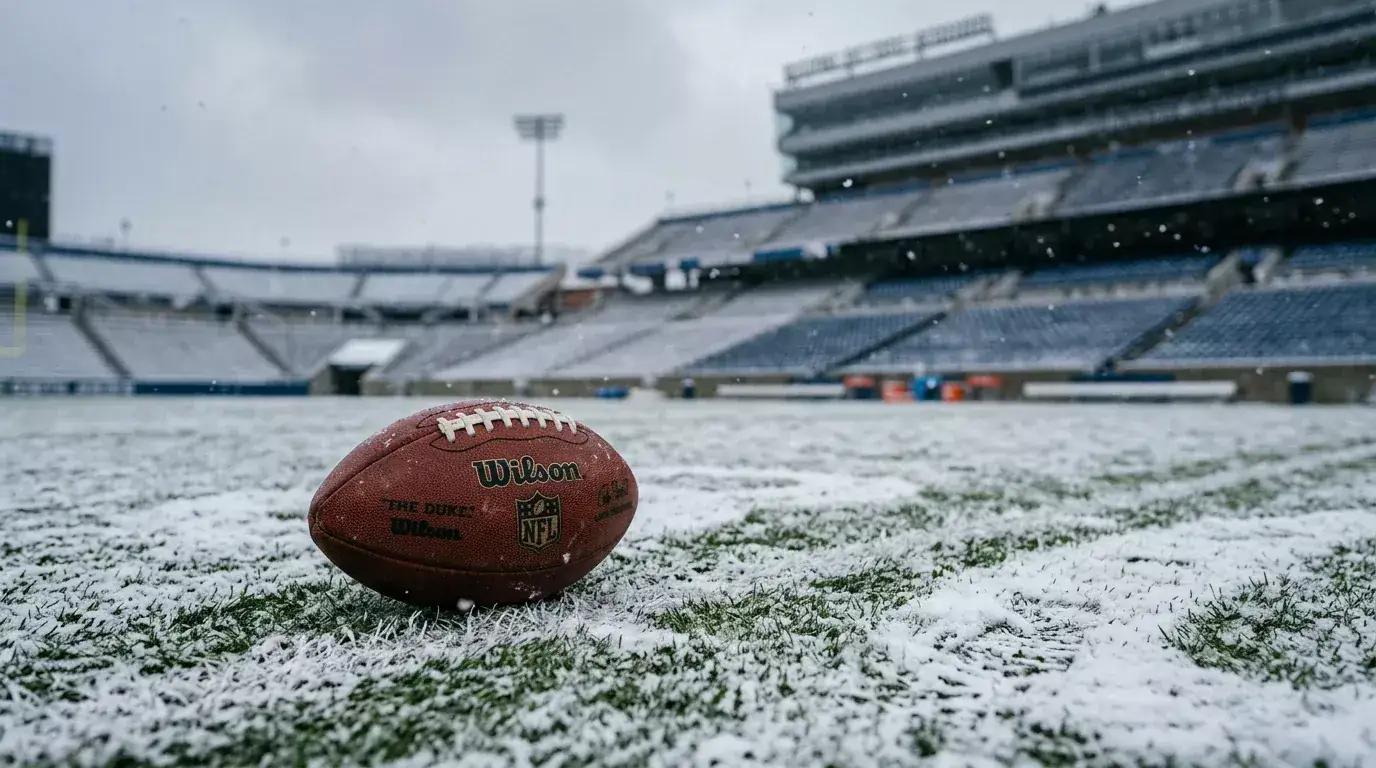
Warren Sharp has spent 19 years documenting his NFL totals bets publicly, posting a 612-456 overall record in the 2025 season and maintaining a 57-63% win rate across nearly two decades. Those numbers would be impressive on spreads. On totals — a market that most bettors treat as secondary to the point spread — they represent one of the longest verified track records in the industry. What Sharp understood before most of us is that totals are the market where the book’s informational edge is thinnest, because setting an accurate total requires predicting not just who wins but how both teams will play, and that’s a fundamentally harder modelling problem.
The public doesn’t help the books get it right. Recreational bettors overwhelmingly prefer overs. Watching points being scored is exciting; watching punts is boring. This isn’t a hypothesis — it’s measurable in betting percentage data week after week. When 60-70% of tickets consistently land on the over, bookmakers can shade the total a half-point or full point higher than the true number, collecting juice from the recreational side while sharps quietly take the under at an inflated price.
I came to totals betting late. For my first five years as an NFL analyst, I focused almost exclusively on spreads and moneylines, treating the total as a side market I’d dabble in during bad weather weeks. The shift came when I started tracking my CLV by market type and realised my totals bets were generating positive closing line value at nearly double the rate of my spread bets. The totals market was simply less efficient, and I was leaving value on the table by not treating it seriously. This guide covers the systems, data and practical filters I use to exploit that inefficiency — with a particular focus on the weather-driven, pace-adjusted and seasonal patterns that consistently produce under value.
Table of Contents
- Weather Under Systems: Wind, Cold and the Scoring Suppressors
- Pace and Efficiency Metrics: The Data Layer Beneath Every Total
- Sharp vs. Public on Totals: Why the Over Gets Hammered and the Under Gets Paid
- Seasonal Totals Patterns: Early-Season Overs, Late-Season Unders
- London Games and Totals: Travel, Timing and Transatlantic Scoring Trends
- Frequently Asked Questions About NFL Totals Betting Systems
Weather Under Systems: Wind, Cold and the Scoring Suppressors
December 2022, a Bills-Dolphins game in Buffalo with wind gusts exceeding 40mph. The total was posted at 47.5, adjusted down a couple of points from where it would have been in calm conditions but nowhere near enough. The game finished 32-29, but even that relatively high-scoring result masked the chaos — seven turnovers, multiple shanked punts, and a passing game that was essentially non-functional for both teams. That’s an extreme example, but it illustrates the core principle: bookmakers adjust totals for weather, but they consistently under-adjust, because their models are calibrated on average conditions and the public still bets overs regardless of the forecast.
Wind is the single most impactful weather variable for NFL totals. At 15mph sustained wind, passing efficiency begins to degrade measurably — ball trajectory becomes unpredictable, deep routes lose their timing, and quarterbacks shorten their drops, limiting the explosive plays that drive scoring. At 20mph, the passing game is materially compromised for both teams. At 25mph+, you’re watching a different sport — ground-and-pound football where field position matters more than scheme and the total should be 5-8 points lower than the posted number suggests. I’ve found that games with sustained wind above 15mph produce under results at a rate meaningfully above break-even, with the edge increasing as wind speed rises.
Temperature below freezing — 0 degrees Celsius for UK readers, 32 degrees Fahrenheit in American weather reports — creates its own set of scoring suppressors. Cold hands increase fumble rates, cold muscles reduce the explosiveness that produces long plays, and cold air carries the ball differently, affecting both passing accuracy and kicking reliability. The impact compounds with wind: a 10mph breeze at 20 degrees Celsius is manageable, but 10mph at minus-5 degrees creates conditions where the ball becomes genuinely difficult to control.
Rain and snow add a third variable, primarily through their effect on footing and ball security. Heavy rain turns the field into a surface where cutting routes lose effectiveness, turnovers increase, and both teams lean heavily on the running game. Snow has a similar but more dramatic effect, with the additional complication that it can accumulate during the game, progressively degrading conditions as the contest continues. Late-game totals in snow games trend under at a particularly high rate because the conditions worsen as the clock advances.
Sixteen of the NFL’s 30 stadiums — more than half — are outdoor venues exposed to weather. The remaining stadiums with retractable roofs occasionally play with the roof open, but for system purposes I treat them as controlled environments unless the roof is confirmed open. The outdoor-venue filter alone narrows the weather system’s applicability to roughly half of each week’s games, and layering the weather thresholds on top of that produces 4-8 qualifying games per month during the October-January window when weather becomes a meaningful factor. For the full breakdown of specific wind-speed thresholds and their ATS impact on totals, the weather effects guide covers each variable in forensic detail.
Pace and Efficiency Metrics: The Data Layer Beneath Every Total
Weather is the obvious totals driver, but pace mismatch is the quiet edge that produces under value in perfect conditions with the roof closed. Two teams that play at radically different tempos create a game environment that the total struggles to price accurately, and the direction of the mispricing depends on which pace dominates.
Plays per game is the simplest pace metric. A team averaging 68 plays per game operates at a fundamentally different speed than one averaging 58 plays per game. When a high-pace offence meets a low-pace defence, the resulting game speed is almost always closer to the slower team’s tempo — because the defence controls pace by forcing punts, running clock between plays, and limiting the quick-strike scoring drives that generate high play counts. The total, often set based on an average of both teams’ scoring outputs, tends to overestimate the combined score because it doesn’t fully discount the pace-suppression effect of the slower team.
Expected Points Added per play — EPA — is the efficiency metric I weight most heavily in my totals model. EPA measures how much each individual play changes a team’s expected scoring relative to the league average. A team with a high-volume, low-EPA offence generates lots of plays but doesn’t score efficiently on each one. A team with a low-volume, high-EPA offence generates fewer plays but converts them into points more reliably. The total market tends to anchor on aggregate scoring averages, which conflate volume and efficiency. When I decompose a team’s scoring into EPA and play count, I frequently find totals that are mispriced by 1.5-3 points — enough to create clear under or over value.
Time of possession is the third pace variable worth tracking. When two run-heavy teams meet, possessions are longer, the clock moves faster, and total plays decrease. The game might look like a 20-17 slugfest with both teams controlling the ball for extended drives, and the total — set based on each team’s season-long scoring average — misses the fact that this specific matchup will produce 8-10 fewer possessions than a typical game. Fewer possessions means fewer scoring opportunities, and fewer scoring opportunities means the under carries embedded value.
I build a simple pace-adjusted model each week by calculating expected possessions (based on both teams’ pace data), multiplying by each team’s points-per-possession rate, and comparing my projected total to the market number. When my model shows a total 2+ points lower than the market, the under qualifies for a bet. This isn’t machine learning or neural networks — it’s arithmetic with publicly available data, and it produces a measurable edge because most bettors (and many models) skip the pace-adjustment step entirely.
Sharp vs. Public on Totals: Why the Over Gets Hammered and the Under Gets Paid
If I could show every recreational bettor one chart, it would be the weekly distribution of public betting percentages on NFL totals. The over side draws 55-65% of tickets in a typical week, with individual games occasionally seeing 75%+ on the over. That lopsided action is the single biggest reason under bets carry value — not because the under hits more often in absolute terms, but because the total is consistently set higher than the true number to accommodate the public’s over bias.
Jeff Hochman at SportsLine has described his analytical focus as identifying systems with at least a 60% win rate, and several of his most successful documented systems are under-focused. The reason is structural: the totals market is where the gap between sharp and public behaviour is widest. Sharp bettors — the accounts that books limit and monitor — take unders at a higher rate than overs. When you see reverse line movement on a total — 65% of tickets on the over, yet the total drops from 45.5 to 44.5 — that’s sharp money moving the market against the public consensus. The book trusts the sharp side more than the volume side, and the line reflects it.
Why does the public love overs so consistently? Three reasons. First, overs are more exciting to root for — every point scored feels like progress toward a winning bet, while unders require watching scoring plays with dread. Second, media coverage disproportionately highlights high-scoring affairs, creating a perception that modern NFL games are shootouts. Third, casual bettors anchor to headline stats — “this team averages 28 points per game” — without adjusting for opponent quality, game environment or pace context. A team that averaged 28 points in September against middling opposition might be genuinely a 22-point team in December against a playoff-calibre defence in cold weather, but the total market takes time to adjust.
I use public betting percentage data as a confirmation filter for my pace-adjusted model. When my model projects an under and 65%+ of public tickets are on the over, the combined signal is substantially stronger than either alone. The model gives me the quantitative case for the under, and the public percentage tells me the market is shaded against my position — meaning I’m getting a better price than I would if money were evenly split. Roughly 70% of my totals bets are unders, and the majority of those carry the dual signal of a model-driven projection plus a lopsided public lean on the over.
Seasonal Totals Patterns: Early-Season Overs, Late-Season Unders
My first two seasons of serious totals tracking revealed a pattern I initially dismissed as noise: overs hit at a noticeably higher rate in weeks 1-5, and unders dominated from week 12 through the playoffs. It took a third season of confirming data before I accepted the pattern as structural rather than random, and once I did, it reshaped my entire seasonal approach to totals betting.
The early-season over lean has a clear causal explanation. NFL offences are ahead of defences in September and early October. Offensive game plans are installed during training camp with full playbook access, while defensive coordination — which depends on reading formations, disguising coverages and reacting to schematic wrinkles in real time — requires live-game reps to calibrate. New defensive coordinators, new personnel groupings and new scheme elements all need time to gel. The result: offences are closer to their ceiling in week 1 than defences are, and totals set based on projected defensive improvement arrive slightly too low early in the season.
By mid-season, defences have caught up. Coordinators have game film on every opponent, personnel packages are settled, and communication — the lifeblood of defensive execution — has sharpened through 10+ weeks of practice and play. Late-season games also coincide with weather degradation in outdoor venues, which layers a second scoring suppressor on top of the defensive improvement. The combination produces a reliable under lean from week 12 onward that’s strong enough to show up in year-over-year data across multiple eras of NFL rules.
Playoff totals deserve separate attention because the under lean intensifies dramatically. Postseason games feature the league’s best defences playing with maximum preparation — two weeks for the Super Bowl, a full bye week for top seeds. Conservative play-calling increases as the stakes rise, because coaches who’ve reached the playoffs are reluctant to gamble with aggressive strategies that could produce turnovers. The public, meanwhile, expects high-profile playoff matchups to be exciting shootouts and bets overs accordingly. This perception gap between expected fireworks and actual defensive grinders creates some of the most reliable under value of the entire season.
My seasonal adjustment is straightforward. In weeks 1-5, I bias slightly toward overs in my model — adding 1-1.5 points to my projected total to account for the offensive head start. From weeks 6-11, I run my standard model without seasonal adjustment. From week 12 through the playoffs, I subtract 1-2 points from my projection to account for defensive maturation and weather. These adjustments are crude compared to what a machine learning model could produce, but they capture the dominant seasonal effect and improve my under hit rate during the late-season window by a meaningful margin.
One trap to avoid: treating the seasonal pattern as a blanket rule that overrides game-specific analysis. A week 14 indoor game between two explosive, pass-heavy offences is not an under just because it’s December. The seasonal adjustment modifies my baseline projection; it doesn’t replace it. When my pace-adjusted model projects an over and the seasonal lean says under, I defer to the game-specific model unless the weather overlay adds a third confirming signal. The seasonal pattern is a filter to sharpen existing analysis, not a system to replace it.
London Games and Totals: Travel, Timing and Transatlantic Scoring Trends
The NFL has played 28+ games in London since 2007, drawing over 2.2 million cumulative fans at an average attendance of 80,941. The 2025 international games averaged 6.2 million viewers across six matches — a 32% increase from the previous year. For UK bettors, these games represent the one window each season where the NFL is happening in our timezone, on our turf, with line-setting dynamics that differ meaningfully from standard US fixtures.
Travel fatigue is the dominant factor in London game totals. Both teams cross the Atlantic, but the impact isn’t symmetrical. East coast teams lose five hours; west coast teams lose eight. Studies on jet lag and athletic performance consistently show that westbound travel (Europe to America) is easier to recover from than eastbound travel (America to Europe), which means both teams are operating under suboptimal conditions, but west coast teams carry a larger physiological disadvantage. The totals implication: expect lower offensive efficiency from both sides, with a slightly larger drag on west coast participants.
The early kickoff time compounds the fatigue factor. London games typically start at 1:30pm or 2:30pm UK time, which translates to 9:30am or 10:30am Eastern and 6:30am or 7:30am Pacific. NFL players are accustomed to afternoon kickoffs in their home timezone. Playing a physically demanding game at what feels like early morning creates a readiness gap that shows up in first-half scoring rates. My tracking of London game first halves suggests lower combined scoring compared to the same teams’ domestic averages, though the sample remains modest enough that I treat this as a directional signal rather than a conclusive finding.
Both Wembley and Tottenham Hotspur Stadium are outdoor venues, which means London games are exposed to UK October weather — cooler temperatures, higher humidity and more frequent rain than the average US venue at the same point in the season. This isn’t dramatic weather compared to a December game in Green Bay, but it’s an environmental condition that neither team has practised in and that the total may not fully incorporate, particularly for games involving teams from dome or warm-weather venues.
My approach to London game totals is conservative: I treat them as under-leaning by default and look for confirmation through the pace and weather filters described earlier. The sample of 28+ games is too small for high-confidence statistical conclusions, but the directional evidence — travel fatigue, early kickoffs, unfamiliar conditions — all point toward lower scoring. When the total is set at 45+ for a London game involving a west coast team, I’m interested in the under. When it’s set at 41 or below, the market may have already priced in the travel effect and the value disappears.
Frequently Asked Questions About NFL Totals Betting Systems
What wind speed threshold consistently pushes NFL games under the total?
Sustained wind above 15mph is the threshold where my data shows a measurable shift toward under results. At 15mph, passing efficiency begins to degrade — deep balls lose accuracy, punt trajectories become unpredictable and kicking reliability drops. The effect intensifies progressively: at 20mph sustained wind, the passing game is materially compromised for both teams, and at 25mph+, the game becomes a ground-based affair where totals should be adjusted 5-8 points lower than calm-weather projections. The key word is sustained — gusts of 20mph with sustained wind of 10mph create occasional disruption but don’t suppress scoring consistently enough to produce a reliable under edge.
Why do sharp bettors favour unders more than overs in NFL totals markets?
Sharp bettors exploit the systematic bias of recreational money toward overs. When 60-70% of public tickets consistently land on the over, bookmakers shade the total upward to balance their exposure. This means the under is priced more generously than it should be based on pure probability. Sharps recognise this structural advantage and take unders at a higher rate than the public, knowing that the inflated total gives them embedded value. The edge is not that unders hit more often in absolute terms — it is that the price on unders is consistently better than the true probability warrants because of the public over bias.
How do dome vs outdoor venue splits affect totals system performance?
Weather-based totals systems are inherently limited to outdoor venues, which account for 16 of the NFL’s 30 stadiums. In domed stadiums, weather is irrelevant, and the totals market is priced more efficiently because the primary source of mispricing — the public’s failure to adjust for conditions — doesn’t apply. My weather under system produces no edge in dome games and I exclude them entirely from the weather filter. Pace and public bias filters still apply in dome games, but the largest single source of under value — weather-driven scoring suppression — is absent. Practically, this means dome games receive less attention in my totals model and fewer qualifying bets per season.
Created by the ”nfl Betting Systems” editorial team.