NFL Live Betting Strategy: In-Play Systems for Sharper Wagers
 Available in US
Three years ago, I watched a game between the Baltimore Ravens and Cincinnati Bengals where Baltimore scored a pick-six on the opening drive. The pre-game spread was Ravens -3. Within 90 seconds of that defensive touchdown, the live spread shifted to Ravens -10.5. Baltimore had scored seven points on a single play — a play that told you almost nothing about how the remaining 58 minutes would unfold — and the market repriced the entire game as if it were already a blowout. Cincinnati covered by a comfortable margin. That 90-second window was a free edge, and it’s the kind of inefficiency that live betting produces repeatedly because the market is forced to reprice in real time under conditions that maximise emotional overreaction.
Live betting now commands 62.35% of the global sports betting market share. That figure was below 40% five years ago. The shift has been driven by mobile technology — 68.4% of industry gross gaming revenue comes from mobile devices — and by bookmakers who’ve realised that in-play markets generate higher hold rates than pre-game bets. More bets, faster bets, less time to think. That combination benefits the house enormously with recreational bettors and creates pockets of value for the disciplined few who bring a system to a market designed to exploit impulse.
I’m not going to pretend live betting is easy to systematise. It’s harder than pre-game betting in every meaningful way: the data moves faster, the windows are shorter, the emotional pressure is more intense, and the temptation to chase is amplified by the fact that there’s always another bet available in 30 seconds. But the inefficiencies are larger, precisely because the market has less time to reach equilibrium. This guide covers the specific in-play patterns I’ve identified, the discipline framework I use to prevent live betting from becoming a leak, and the practical considerations for UK bettors watching games that kick off at 6pm on a Sunday evening.
Table of Contents
- Overreaction Windows: The 60-120 Seconds Where Value Appears
- Halftime Adjustments: Second-Half Systems and Mean Reversion
- Mobile UX and Speed: How App Design Shapes Betting Behaviour
- Live Totals Strategy: Scoring Surges, Pace Shifts and the Under Edge
- Responsible Live Betting: Session Controls for the Fastest Market
- Frequently Asked Questions About NFL Live Betting Systems
Overreaction Windows: The 60-120 Seconds Where Value Appears
The NFL is a sport of emotional swings compressed into three-hour windows, and live betting markets absorb every one of them. A pick-six, a fumble on the goal line, a 75-yard touchdown pass — these plays are dramatic, memorable and, from a market efficiency standpoint, massively overweighted by the algorithms and the humans feeding them.
When a high-impact play occurs — particularly early in the game when there’s limited data for the live model to work with — the spread shifts rapidly and often excessively. The window of maximum overreaction lasts roughly 60 to 120 seconds after the play. During this window, the live spread reflects the emotional shock of the event rather than a recalibrated assessment of each team’s win probability. A team that was -3 pre-game and scores an early defensive touchdown might see its live spread jump to -10 or beyond, which implies a fundamental shift in game dynamics that one play simply doesn’t support.
The contrarian entry is straightforward in concept: when the live spread has overreacted to a single emotional event, bet the other side. If the pre-game line was -3 and the live spread has swung to -10.5 after an early pick-six, the team that just conceded hasn’t suddenly become 7.5 points worse. Their offensive and defensive capabilities haven’t changed. Their game plan hasn’t been abandoned. What’s changed is the score, and the score in the first quarter of an NFL game is a terrible predictor of the final margin.
I’ve tracked these windows across four full seasons and identified three play types that consistently produce the largest overreactions: defensive touchdowns (pick-sixes and fumble-return TDs), punt or kick return touchdowns, and turnovers inside the 10-yard line. All three share a common feature — they produce points or prevent points through low-probability events that are unlikely to repeat. A pick-six on the opening drive tells you that one quarterback threw one bad pass that one defender caught. It does not tell you that the offence is broken or the defence is dominant. The live market treats it as if it does, and that’s the gap.
Timing the entry is the practical challenge. You need to be watching the game, recognise the overreaction as it happens, check the live spread within 30-60 seconds, and place the bet before the market self-corrects. In my experience, the correction begins roughly two minutes after the emotional event as the live model incorporates subsequent plays and the spread begins to revert. If you wait five minutes, most of the value has been absorbed. This isn’t a system you can run from a spreadsheet while doing something else — it requires active, focused attention during the game.
For UK bettors, the 6pm Sunday window is both a blessing and a curse. Eight or nine games kick off simultaneously, which means multiple potential overreaction events occurring in parallel. You can’t watch all of them. My approach is to identify two or three target games pre-match based on my pre-game analysis, focus my live attention on those, and ignore the rest. Trying to monitor eight live games simultaneously leads to rushed decisions and missed value — the exact opposite of what a systematic approach demands.
Halftime Adjustments: Second-Half Systems and Mean Reversion
Halftime is where NFL coaches earn their salaries. The 20-minute break gives coordinators time to review first-half film, identify what worked and what didn’t, and adjust their game plan. For live bettors, halftime represents a distinct market with its own pricing dynamics — second-half lines are effectively a new game within the game, and they carry different inefficiencies than the first-half live market.
The pattern I’ve found most reliable is mean reversion in games where one team trails by 7 to 14 points at halftime. This range is critical — it represents one or two scoring plays, which is well within the normal variance of a single half of NFL football. A team down 10 at halftime hasn’t been outclassed; it’s been outscored in a sample of 30 minutes. If the pre-game spread was within a touchdown, the trailing team at halftime is often significantly underpriced by the second-half line because the market has anchored to the first-half score rather than the underlying team quality.
Coaching adjustments drive this mean reversion. Teams trailing at halftime have a clear information advantage going into the second half: they’ve seen exactly what the opponent’s game plan is and can adjust accordingly. The leading team, conversely, faces a strategic dilemma — do they keep doing what worked, even though the opponent is now scheming against it, or do they shift to a more conservative approach that protects the lead but reduces their offensive efficiency? Both choices typically compress the second-half scoring margin relative to what the halftime score suggests.
I’m cautious about extending this pattern beyond the 7-to-14-point range. Teams trailing by 17 or more at halftime face a fundamentally different game situation. They need to play from behind with urgency, which means more passing, more risk-taking and more variance in outcomes. The mean-reversion logic weakens when the deficit forces the trailing team into a one-dimensional strategy that the leading team can scheme against. My data shows the second-half cover rate for teams trailing by 17+ drops below 50%, making it a losing proposition on average.
The window for placing second-half bets is narrow. Most UK bookmakers post halftime lines within 5-8 minutes of the half ending, and the lines sharpen quickly as early bettors take the most obvious value. If you’ve identified a qualifying situation — a competitive pre-game spread, a trailing team with a specific schematic adjustment opportunity, a first-half score driven by non-repeatable events — you need to be ready to act within the first two minutes of the second-half line posting. Waiting for the second half to begin and watching a few plays before betting means the market has already incorporated the adjustment information you were planning to exploit.
Mobile UX and Speed: How App Design Shapes Betting Behaviour
FanDuel’s single-tap bet-slip feature drove a 22% increase in mobile betting volume during the NFL season. Let that sink in. A UX change — not a new market, not better odds, just a faster path from decision to wager — increased betting volume by more than a fifth. That’s not a neutral design choice. It’s an architecture optimised to reduce the friction between impulse and action, and it works spectacularly well on a population of bettors who are already emotionally engaged with a live sporting event.
In the UK, 76% of bettors aged 18-24 use mobile phones for their wagering. Ninety-five percent of online gambling happens from home. The typical live NFL betting session for a UK punter involves sitting on a sofa, watching a game on Sky Sports or an NFL streaming service, with a betting app open on a phone beside them. The physical distance between “I think the Chiefs will cover” and “I’ve just bet GBP20 on the Chiefs” is a thumb movement. That’s it. One tap.
This matters for system bettors because mobile UX is designed to subvert exactly the kind of deliberate, analytical process that makes live betting profitable. The single-tap interface doesn’t show you your running P&L for the session. It doesn’t remind you that you’ve already placed four bets in the last 20 minutes. It doesn’t ask whether this bet meets your system criteria. It just executes. The speed that makes the app convenient for recreational bettors makes it dangerous for anyone trying to maintain discipline during a live game.
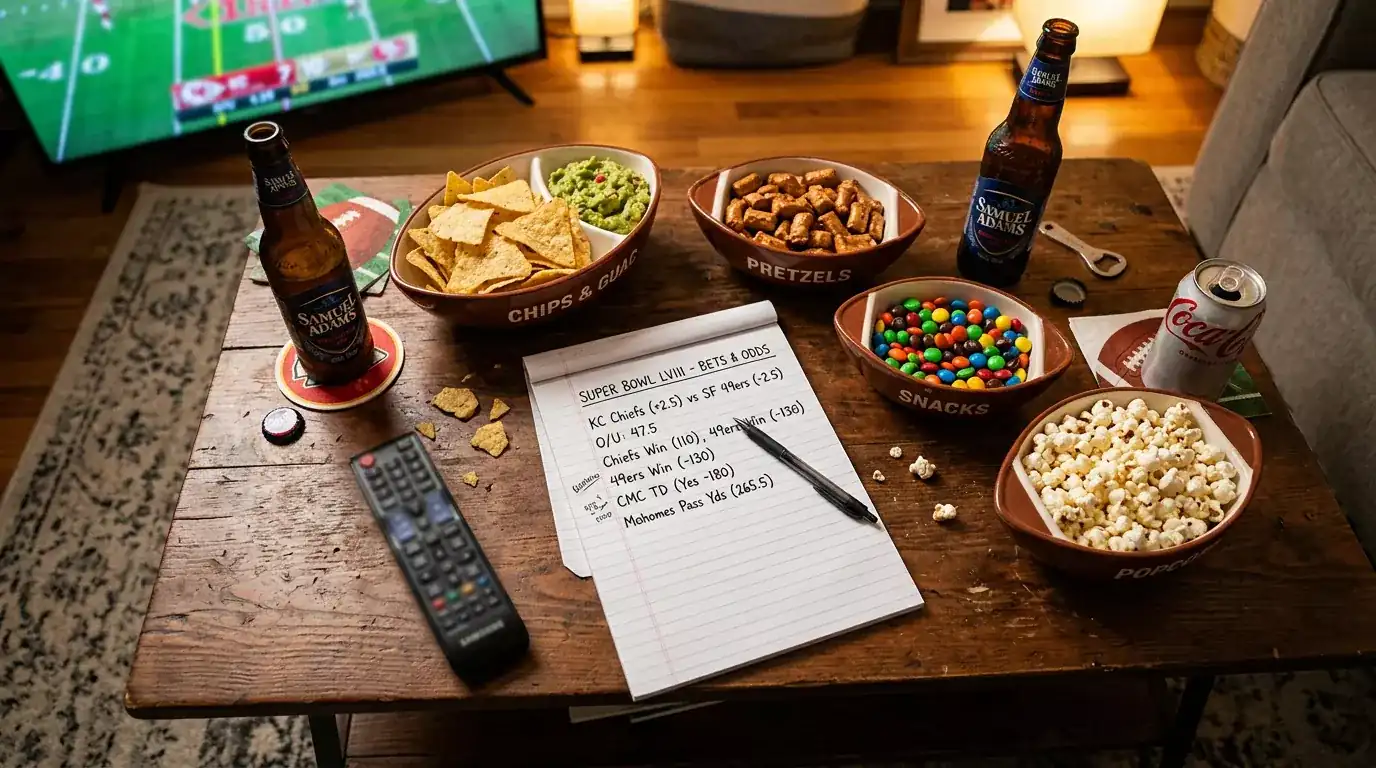
My countermeasure is deliberately clumsy. I keep a physical notebook next to me during live betting sessions with three questions written at the top: Does this game qualify under my pre-game filters? Is there a specific overreaction event I’m responding to? Have I already placed a live bet on this game today? If the answer to any of these is wrong, I don’t touch the app. The notebook introduces exactly the kind of friction that the app is designed to remove. It forces a 15-second pause between impulse and action, and in live betting, 15 seconds of reflection is often the difference between a system bet and a tilt bet.
I’m not anti-mobile — I place the majority of my bets through apps because the alternative is a desktop browser that’s slower and less convenient. But I treat the mobile interface as a loaded weapon that I need to handle with specific safety protocols. Every efficiency feature the app offers — one-tap betting, quick deposits, instant bet builders — is a feature designed to increase your volume and reduce your discipline. Use the tool, but understand what it’s optimised for, and build your own friction layer on top of it.
Live Totals Strategy: Scoring Surges, Pace Shifts and the Under Edge
Warren Sharp has documented a 57-63% win rate on NFL totals across 19 years of public tracking, with a 612-456 overall record in the 2025 season alone. Those numbers are built primarily on pre-game totals, but the principle — that the public systematically overvalues overs — amplifies in live markets where scoring events trigger emotional chain reactions.
The specific live totals pattern I exploit is what I call the “scoring surge under.” Here’s the setup: a game with a pre-game total of 44 kicks off, and both teams score touchdowns on their opening drives. Fourteen points in the first seven minutes. The live total adjusts upward — often to 52 or higher — because the scoring pace extrapolated across a full game suggests a shootout. But NFL games almost never maintain first-quarter scoring rates. Defensive adjustments kick in, play-calling becomes more conservative with a lead, the pace slows as teams establish the run, and the second half typically produces fewer points than the first. The adjusted live total overreacts to the early scoring, creating under value.
The key is selectivity. Not every early-scoring game represents under value. The signal is strongest when the early scoring was driven by non-sustainable events — a short field after a turnover, a busted coverage, a special teams breakdown. These are high-variance plays that inflate the score without reflecting a genuine offensive dominance that’s likely to continue. If both offences are methodically marching 80 yards on every possession, the early scoring pace is more likely to sustain, and the live total adjustment might actually be justified.
I also track pace-adjusted live totals. If a game is running at a significantly higher-than-expected plays-per-minute rate in the first quarter — indicating hurry-up offences and quick scoring drives — the live total adjustment may be accounting for pace rather than efficiency. But pace typically slows after the first quarter as teams begin to manage the clock, which means pace-inflated live totals carry under value even when the offensive quality is genuine. The combination of scoring surge plus pace inflation is the strongest live under signal in my framework.
For a more comprehensive breakdown of how weather, pace metrics and seasonal patterns affect totals markets, the same-game parlay strategy guide covers how totals interact with prop markets in the SGP context, where live totals and player props create correlated edges.
Responsible Live Betting: Session Controls for the Fastest Market
Christopher Welsh, an addiction psychiatrist at the University of Maryland, noted a stark shift in the calls his centre receives: “It’s almost all online sports betting now.” Live betting is the sharpest edge of that trend. The combination of real-time emotional engagement, instant bet execution and continuous availability creates a risk profile that pre-game betting simply doesn’t match. I’ve seen disciplined bettors — people with solid pre-game systems and years of profitable results — lose months of profit in a single live betting session because the speed of the market outran their discipline.
The UK regulatory environment has tightened specifically in response to these risks. Affordability checks are now standard practice among UKGC-licensed operators, and the 2025 regulatory changes signal that more intervention is coming. While current affordability triggers are calibrated primarily for high-volume slot players, the direction of regulation is clear: operators will increasingly be required to identify and intervene when betting patterns suggest harm, and live betting’s rapid-fire nature makes it a likely target for enhanced scrutiny.
Thirty-four percent of British bettors acknowledge that advertising influences their betting behaviour, and people with problematic gambling patterns are nine times more likely to receive free bet offers from operators. In the live betting context, this creates a particularly dangerous feedback loop: a bettor on a losing streak receives a “free live bet” push notification during a game they’re already watching and emotionally invested in, which encourages exactly the kind of impulsive wager that a system bettor should avoid.
My live betting discipline framework has three hard rules. First: pre-commit to a maximum number of live bets per session before the game starts. I allow myself three live bets per game, maximum. If I’ve placed three and see a fourth opportunity, it doesn’t matter how good it looks — I’m done for that game. Second: separate my live betting bankroll from my pre-game bankroll. I allocate no more than 20% of my total weekly units to live betting, and when they’re gone, they’re gone. Third: no live betting after 10pm UK time. Late-game windows — the 1:20am US kickoffs — coincide with fatigue, reduced cognitive function and the emotional residue of whatever happened in the earlier games. Nothing good comes from live betting while tired.
These rules cost me potential profit. There are nights where I see a clear fourth overreaction opportunity and can’t take it. There are weeks where my live allocation runs out on Saturday and I miss a Sunday value spot. That’s the point. The rules aren’t designed to maximise short-term returns — they’re designed to ensure that live betting remains a controlled, profitable component of my overall system rather than an emotional trapdoor that swallows my pre-game profits. The fastest market demands the tightest controls.
Frequently Asked Questions About NFL Live Betting Systems
How quickly do NFL live betting lines adjust after a scoring play?
Live lines typically shift within 5-15 seconds of a scoring play being confirmed by the official game feed. The initial adjustment is algorithm-driven and often overshoots, particularly after high-impact events like defensive touchdowns or special teams scores. The market self-corrects over the following 60-120 seconds as the live model incorporates subsequent plays and sharps take contrarian positions. The practical window for capturing overreaction value is roughly 30-90 seconds after the initial shift — too early and the line hasn’t fully overreacted, too late and the correction has already begun. Active game monitoring is essential; there is no way to exploit this pattern without watching the game in real time.
Is live betting more profitable than pre-game betting for systematic bettors?
Not inherently, but it offers different and sometimes larger inefficiencies. Pre-game markets have hours or days to reach equilibrium, which makes edges smaller but more reliable. Live markets reprice under time pressure and emotional influence, creating larger but more fleeting edges. My experience across nine seasons is that pre-game systems produce steadier returns with less cognitive load, while live betting produces occasional outsized wins but requires intense focus and carries higher variance. I allocate roughly 80% of my units to pre-game systems and 20% to live betting, which reflects both the relative reliability and the psychological cost of each approach.
What bankroll rules should I set specifically for in-play NFL wagers?
I recommend three structural controls. First, cap your live betting allocation at 15-20% of your total weekly units — this prevents live betting from cannibalising the steadier returns of your pre-game systems. Second, set a per-game maximum of three live bets regardless of how many opportunities you identify. The fourth and fifth bets in a single game are almost always lower-quality decisions driven by engagement rather than analysis. Third, establish a hard time cut-off; for UK bettors, I suggest no live betting after 10pm GMT. Late-night sessions coincide with fatigue and the emotional carry-over from earlier results, both of which degrade decision quality measurably.
Published by the nfl Betting Systems team.